Services

From the first feed-water analysis to end-of-life element replacement. Engagements range from short advisory assignments to multi-month support of a complete procurement and commissioning cycle. We do not sell turn-key plants — we act as the client's independent technical arm.

01 — Feasibility

Technology selection & feasibility

Before any equipment is specified, the question is whether membranes are the right answer at all — and if so, which class, format and configuration. We answer that question with data, not with a catalogue.

  • Feed / product specification review: full ionic balance, TOC/COD, SDI15/MFI fouling indices, microbiology, temperature envelope.
  • Technology screening: MF/UF/NF/RO versus ion exchange, EDI, conventional clarification and thermal processes — or hybrids thereof.
  • Membrane projection modelling in the same design suites the manufacturers use; scaling indices (LSI/S&DSI) and saturation limits verified independently.
  • Viability audit of vendor proposals: recovery, flux conservatism, fouling allowances, CIP provisions and guarantee conditions; CAPEX/OPEX and specific-cost (€/m³) comparison.
  • Pilot-trial scoping, protocol definition and evaluation of results.
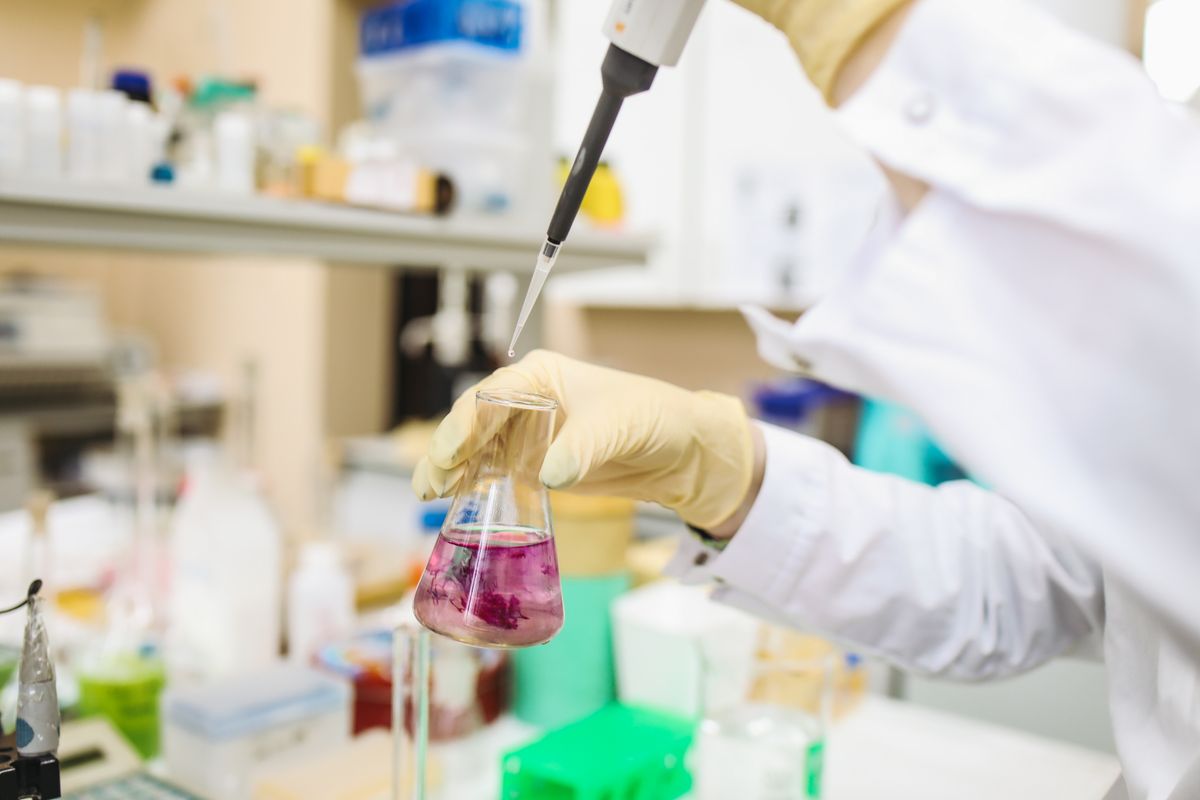
Laboratory analysis of a water sample with pipette and flask
02 — Line design

Process & line design support

Every stage upstream protects the membranes; every stage downstream protects the product. We design — or review — the whole line with that discipline.

  • Mass balance, recovery and flux design; array and staging (e.g. 2:1 arrays, concentrate recirculation, inter-stage boost), permeate splitting and blending/bypass strategies.
  • Pretreatment: screening, media and cartridge filtration, coagulation–flocculation, DAF, greensand/catalytic Fe–Mn removal, softening and ion-exchange stages, dechlorination.
  • Post-treatment: remineralization (calcite or dosing), UV disinfection, degassing, polishing ion exchange or EDI, chemical dosing regimes.
  • CIP system design: chemical selection and sequencing, temperatures, cross-flow regimes, neutralization.
  • P&ID and equipment-list review; hydraulics, pump duty points, materials selection — including duplex and super-duplex stainless steels for high-TDS duties.
03 — Procurement

Supplier screening & procurement facilitation

Because we hold no distribution mandates, we can run genuinely competitive sourcing across multiple supply bases — and consolidate the result into one managed delivery.

Qualification & RFQs

  • Supplier identification, screening and qualification; factory and reference checks where warranted
  • RFQ preparation with levelled technical specifications
  • Bid comparison normalized for scope, materials, guarantees and delivery terms

Consolidated supply

  • Membranes, vessels, pumps, instrumentation and piping components batched from multiple vendors into single managed, documented shipments
  • Import/export documentation and Incoterms® 2020 guidance
  • Freight and customs coordination with licensed forwarders and brokers

Parts & consumables

  • Membrane elements, cartridge filters, housings, seals and interconnectors
  • CIP and dosing chemicals
  • Cross-referencing of replacement elements between manufacturers — dimensional, performance and warranty considerations
04 — Commissioning

Installation & commissioning support

A membrane plant is won or lost in its first weeks. Correct start-up sequencing and a clean performance baseline decide whether problems are caught in month one or year two.

  • Installation supervision; factory and site acceptance testing (FAT/SAT) protocols and witnessing
  • Flushing, membrane loading, preservative removal and start-up sequencing
  • Performance testing against projections; temperature- and pressure-corrected normalization baselining from day one
  • Operator training, SOPs and O&M documentation; data-logging templates
  • Warranty-claim and performance-guarantee support toward vendors
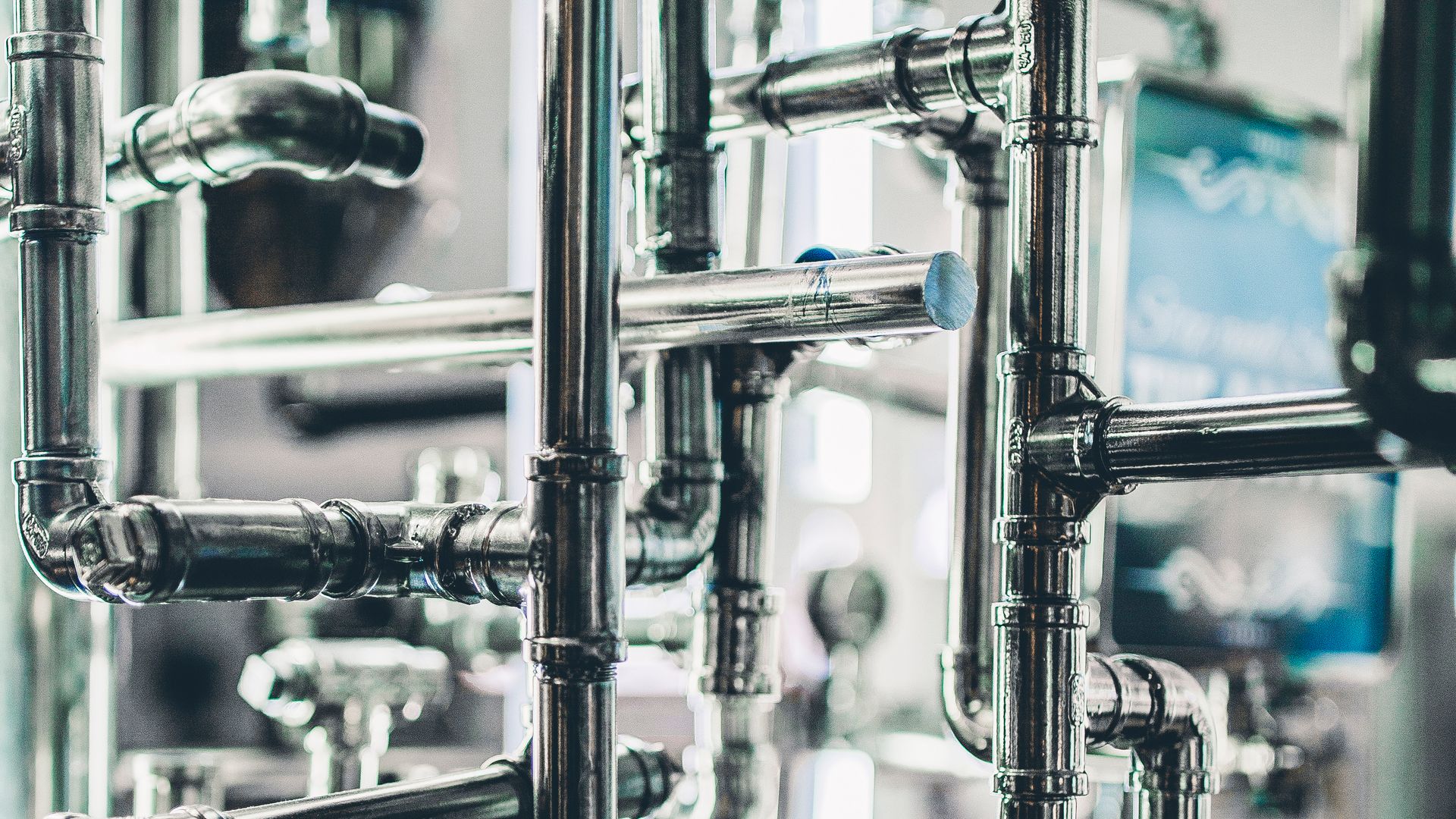
Sanitary stainless steel process piping
05 — Automation

Automation, control & process software

Membrane plants are unforgiving of poor control: an RO train started against a closed valve, a CIP run at the wrong temperature, or an uncalibrated antiscalant pump can destroy elements worth tens of thousands of euros. Custom and semi-custom lines rarely fit the standard control packages shipped with catalogue skids — so we treat automation as a first-class discipline alongside process design, working across the major industrial platforms (Siemens, Rockwell, Schneider Electric, Beckhoff and others) with platform-certified programmers.

Design & specification

  • Control philosophy and functional design specification (FDS) for new or retrofitted lines
  • I/O lists, instrument specification and datasheets; control-panel design review
  • Interlock and safety logic: dry-run, high-pressure, low-suction, conductivity diversion
  • Sequence design: start-up/shutdown ramps, flush cycles, CIP recipes, preservation modes

Implementation

  • PLC programming to IEC 61131-3 (ST, LD, FBD)
  • HMI/SCADA application development, alarm philosophy and historian configuration
  • Telemetry and remote access: OPC UA, MQTT, VPN-secured maintenance access
  • FAT/SAT of control systems; loop checks; GAMP-aligned documentation for food and pharma

Membrane-specific software

  • Data-normalization engines (ASTM D4516-type temperature/pressure correction) for early fouling detection
  • CIP-trigger logic from normalized permeate flow, differential pressure and salt-passage trends
  • Dashboards and reporting for multi-site or unmanned containerized plants
  • Custom software for batch concentration, diafiltration recipes, blending optimization

Lifecycle support

  • Control-system audits of existing plants; obsolescence assessment and migration planning
  • Retrofit of monitoring onto legacy relay or HMI-only skids
  • Remote monitoring with periodic performance reports
06 — Audits & laboratory

Audits, diagnostics & optimization

Most membrane plants run below their design point within two years of commissioning — usually for identifiable, correctable reasons: drifted pretreatment, an unsuitable CIP regime, wrong replacement elements, or setpoints never revisited after start-up. We return plants to — or beyond — design performance.

Performance auditing

  • Normalized performance review: permeate flow, differential pressure, salt passage vs. baseline
  • Recovery and specific-energy (kWh/m³) benchmarking; VFD and staging optimization
  • Fouling/scaling diagnosis from operating data, scaling indices and mass balances
  • CIP effectiveness review: chemistry, sequence, temperature, cross-flow, frequency
  • Retrofit planning: energy-recovery devices, low-energy or high-rejection elements, array changes

Laboratory diagnostics

  • Feed / permeate / concentrate analysis: full ionic panels, silica, TOC, COD/BOD, heavy metals, microbiology
  • Fouling indices: SDI15, MFI; foulant sampling from cartridges and elements
  • Standard-condition wet testing of new or used elements against factory specification
  • Membrane autopsy: controlled dissection, foulant characterization (SEM-EDS, FTIR, loss-on-ignition), biological typing, dye and integrity tests
  • Lab-scale cleaning studies to qualify CIP chemistry before plant-scale application

Laboratory work is performed with independent partner laboratories specialized in water and membrane analysis, coordinated by us and reported to you with an engineering interpretation — not just numbers.

Independence note. Because we sell no brand, audit conclusions carry no sales agenda: if the correct answer is to change the CIP recipe and keep your membranes two more years, that is the recommendation you receive.

Working with us

Engagement forms

Work is contracted as fixed-fee studies and audits, day-rate advisory, procurement mandates with agreed facilitation terms, commissioning assignments, software projects, or ongoing support retainers. Scope, deliverables, confidentiality and limits of liability are defined in a written engagement agreement before work starts.

Every project is unique and is quoted individually for its actual scope — we do not sell standard packages, and where a task is better served by a licensed engineer of record, local contractor or a manufacturer's own service organization, we say so.

Discuss your project

Describe your situation — a proposal on your desk, a plant losing flux, a new product line, a sourcing task — and we will suggest the leanest way to get you a reliable answer.

Contact us